
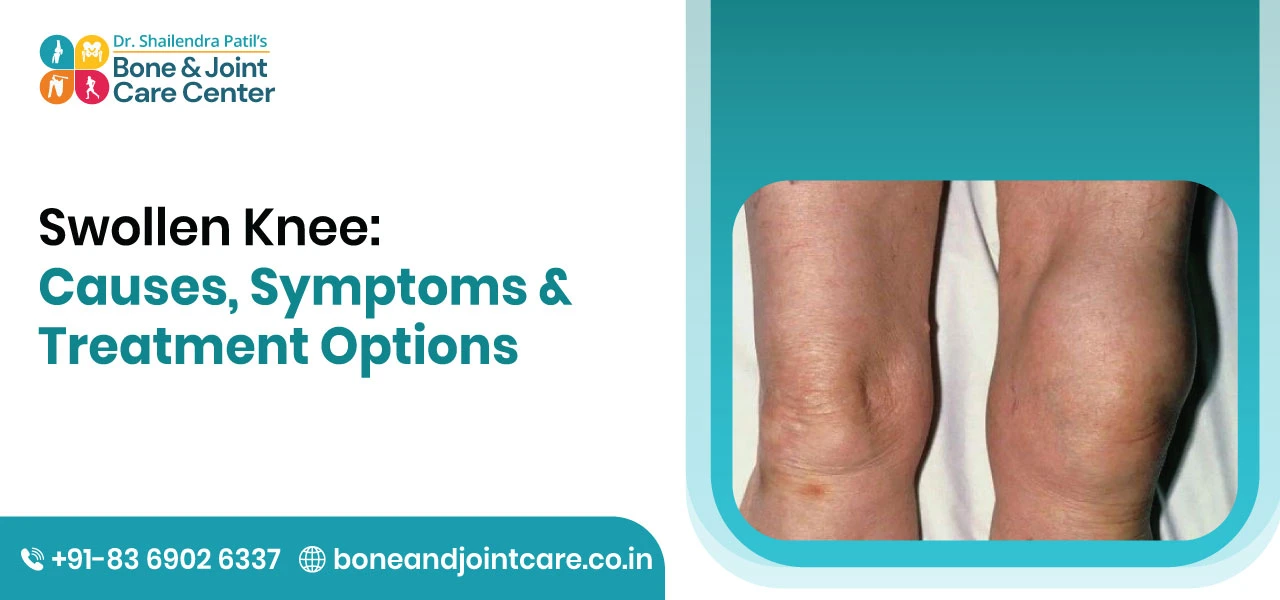
A swollen knee occurs when there’s fluid in your knee joint. Common causes include knee injuries, osteoarthritis, rheumatoid arthritis, knee infection, and knee overuse. Treatment depends on the underlying cause.
Swollen Knee: Causes, Symptoms & Treatment Options
A recent injury or a long-standing joint disease can make your knees swollen. This swelling can occur suddenly after an accident or develop gradually over time as part of an underlying disease.
Knees may swell when fluid collects inside or around your knee joint. Not every swollen knee requires immediate surgery, but visiting an orthopedic doctor in Thane is a good decision if you have been experiencing other symptoms alongside swelling.
Common Causes of Swelling in the Knee
Here’s a look at the common conditions that can make your knee swell:
-
Knee Injuries
Sudden twisting or pivoting movements, landing on the ground awkwardly, or taking sharp turns can all put excessive force on your knee joints and can sometimes damage the ligament or other tissues.
ACL tears, for example, are one of the most common causes of knee swelling. Sometimes, meniscus tears, tendon damage, or kneecap injuries can cause swelling, along with pain, tenderness, redness, and difficulty moving the affected joint.
-
Osteoarthritis
Common in older people, osteoarthritis is a joint disease where the cartilage, the cushion that protects the bones and prevents them from rubbing against each other, wears down.
With the cartilage getting thinner, the joint can become inflamed. This can cause swelling, along with pain that gets worse with movement and stiffness in the morning.
-
Rheumatoid Arthritis
Knee swelling can also occur due to an autoimmune disease that attacks the lining of the joints, commonly called rheumatoid arthritis. In most cases, the condition affects both joints, so you might experience stiffness and pain in both knees. The inflammation doesn’t just cause swelling, but also intense pain, warmth, and stiffness.
-
Knee Infection
A more serious condition that can cause swelling in the knee joint is a knee infection. Also called septic arthritis, the infection can spread from the bloodstream to the joint and may damage the knee structure.
This often requires immediate treatment, as the infection can damage the entire joint quickly if left unaddressed for long. Common signs of a knee infection include sudden and intense knee pain, along with swelling, redness, and warmth around the infected site, difficulty moving the knee, and fever and chills.
-
Knee Overuse
If you have recently increased your workout intensity or frequency, this could be the reason for knee swelling. However, swelling from knee overuse often gets better with rest, elevation, compression, and other remedies. If it’s persistent or occurs alongside other symptoms, it’s worth getting evaluated.
Treatment for Swollen Knees
Swollen knee treatment in Thaneis decided based on the underlying cause of swelling. For example, knee pain due to arthritis can be relieved with NSAIDs, although severe cases may eventually require surgical intervention.
Swelling after an injury, trauma, or an accident should be immediately reported to a healthcare specialist. Likewise, see an orthopedic doctor urgently if you notice signs of infection along with intense knee pain, swelling, warmth, redness, and difficulty bending or straightening the affected joint.
For swelling due to knee overuse, the RICE method may be enough.