
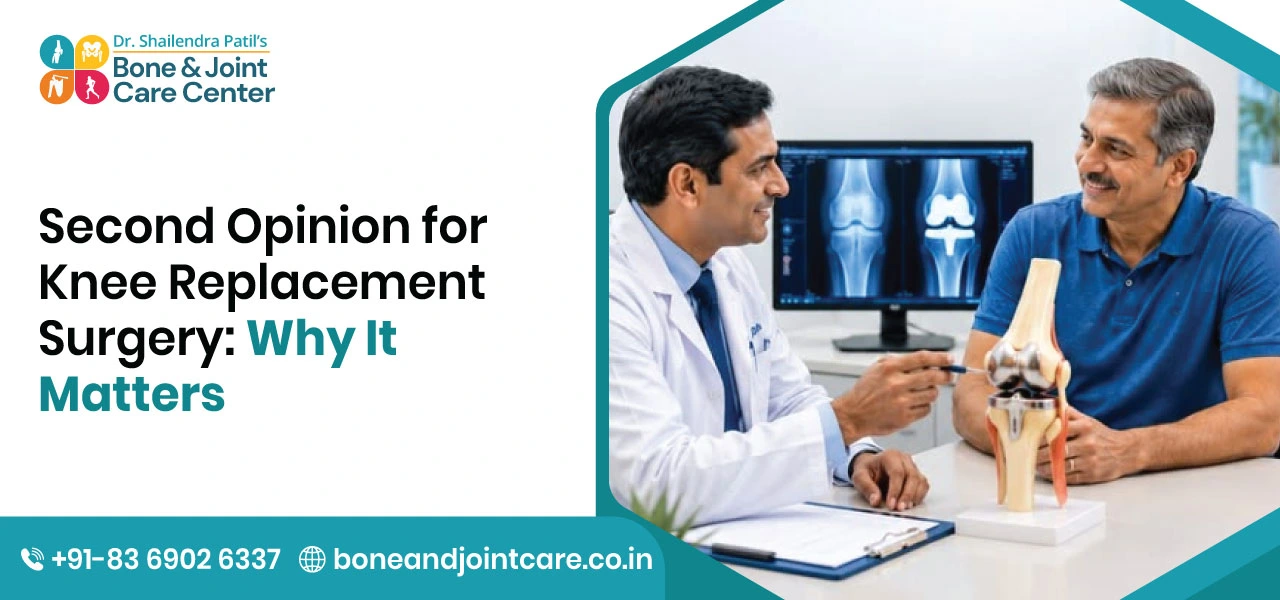
A second opinion for knee replacement surgery matters, as it helps you know if the surgery is actually needed or if you should try other conservative treatments first. It also helps you determine the true source of pain and the accuracy of your diagnosis so far.
Second Opinion for Knee Replacement Surgery: Why It Matters
You have debilitating knee pain that gets worse when you walk, climb stairs, or do day-to-day activities. You have tried medication, physiotherapy, and all possible treatments, but nothing has worked so far, and your doctor has already recommended surgery. However, before you undergo knee replacement surgery in Thane, should you get a second opinion?
Yes, in many cases, it’s worth it. Of course, a second opinion doesn’t mean your doctor isn’t qualified, or that it’s okay to delay treatment. It’s for your own peace of mind. Besides, a second opinion can help you reach an informed decision.
Why Does a Second Opinion Matter for Knee Replacement?
Knee replacement is a major surgical procedure. While it may be the most appropriate treatment option for you, it’s not a bad idea to consult another doctor just to be on the safe side. Here’s why a second opinion matters.
To Know If You Really Need Knee Replacement
The pain you experience may not match what’s on the X-ray or other imaging tests. Sometimes, the reports show excessive damage to the knee and surrounding structures, while you may have minimal pain.
A second opinion allows you to see another qualified doctor’s perspective. Perhaps you may not need surgery if your joint is stable, the pain is bearable, or there’s a chance other conservative treatments may work.
You can Explore Other Treatment Options
Your surgeon may recommend knee replacement if you have arthritis. But it doesn’t necessarily mean you need surgery right away. Sometimes, another orthopedic surgeon in Thane may ask you to continue with the current treatment or explore other conservative options. These can be considered before surgery:
- Medication: Painkillers and anti-inflammatory medicines can help relieve pain and inflammation.
- Physiotherapy: You can start physical exercises under a physiotherapist’s supervision. These exercises can help strengthen the muscles surrounding the knee joint, while allowing you to move more comfortably.
- Injections: Corticosteroid injections provide short-term relief from inflammation and significant joint pain.
To Decide on the Best Knee Replacement Approach
The right surgical approach is decided based on which ligament is affected, the severity of the damage, and your health. A total knee replacement is advised if the entire joint is damaged, while partial knee replacement removes and replaces only the affected portion of the joint.
In some patients, a bilateral knee replacement, where both knees are replaced at the same time, can be a more appropriate treatment option.
To Know Other Factors Affecting Your Knee Joint
Not every case of knee pain has pain originating from the knee. A second opinion helps you evaluate whether the problem is joint disease or another condition that may require a whole different treatment approach. This can matter when you develop new symptoms, such as tingling or numbness.
Overall, a second opinion is worth having when you are not satisfied with your treatment plan or aren’t confident about your diagnosis.