

Robotic Knee Replacement Surgery in Mumbai and Thane
Knee pain has a way of slowly taking over daily life. Stairs become something to think twice about. A wedding, a temple visit, or a walk with your grandchildren start to depend on how your knee feels that day. If you’re researching robotic knee replacement surgery in Mumbai, chances are you’ve already tried medicines, physiotherapy, and injections — and now you want a clear, honest answer on whether surgery is the right next step.
Dr. Shailendra Patil has performed over 1000+ robotic knee and joint replacement surgeries using the CUVIS 3rd Generation Active Robotic System. With 15+ years of orthopedic experience and 8,500+ surgeries completed across Mumbai and Thane, he brings both surgical skill and hands-on experience with this technology to every case.
Why Patients Choose Dr. Shailendra Patil for Robotic Knee Repalcement
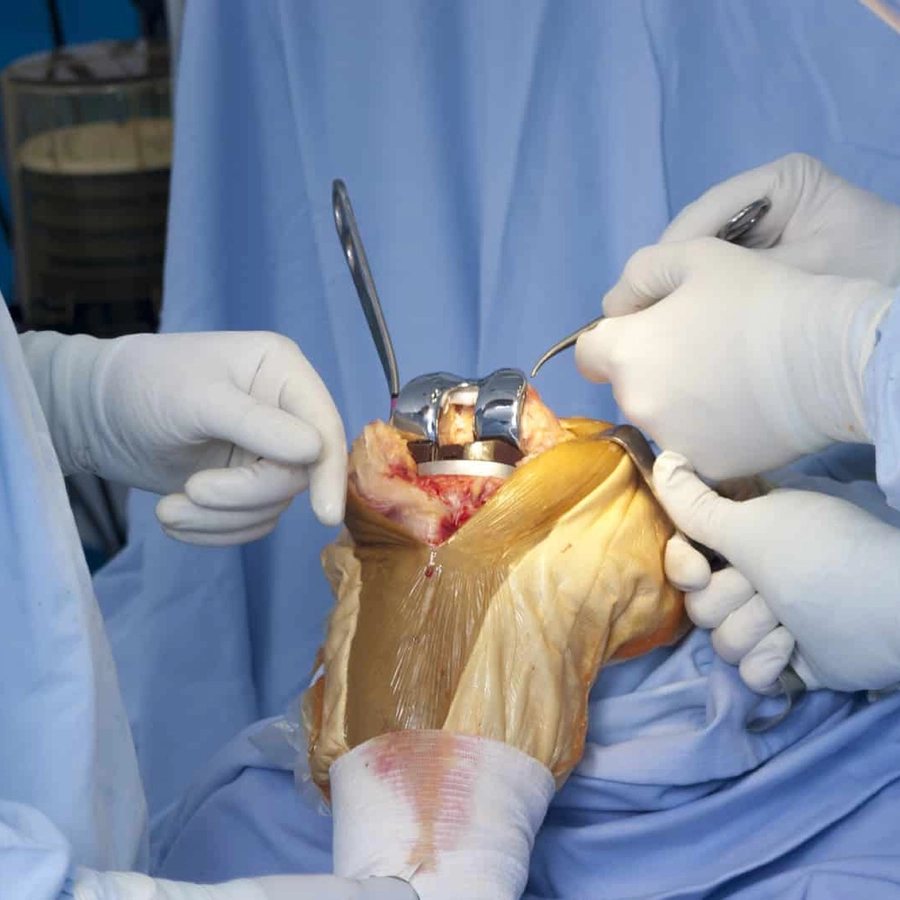
Robotic technology helps surgeons plan and perform knee replacement surgery with greater precision, but the surgeon’s experience remains very important. A robot assists the surgeon; it does not make decisions on its own.
Dr. Shailendra Patil specializes in robotic knee and joint replacement surgery, hip replacement, and sports injury treatment. His surgical experience helps him understand each patient’s unique anatomy and make informed decisions during surgery.
Dr. Patil focuses on selecting the most appropriate treatment based on each patient’s condition, individual needs, and recovery goals.
Robotic surgery may be suitable for some patients, while others may benefit from non-surgical treatments such as physiotherapy, medication, or injections. The treatment approach is tailored to each patient’s needs.
Patients can consult Dr. Patil at Aditi Hospital Mumbai and Curre Hospital Thane. He explains the condition and treatment options in simple language and provides personalized advice based on each patient’s needs.
What Is Robotic Knee Replacement Surgery?
Robotic knee replacement is a type of knee replacement surgery where the surgeon uses robotic technology and computer planning to improve precision during the procedure. The robot does not perform the surgery on its own. The surgeon remains in control throughout the operation.
Before surgery, a CT scan of the patient’s knee is used to create a 3D model of the knee. Dr. Shailendra Patil uses this model to plan the surgery, including the implant size, position, and alignment according to the patient’s individual knee anatomy.
During surgery, the CUVIS robotic system provides real-time guidance and helps Dr. Patil follow the planned surgical parameters with precision. The system acts as a surgical tool and assists with accuracy while the surgeon performs the procedure.
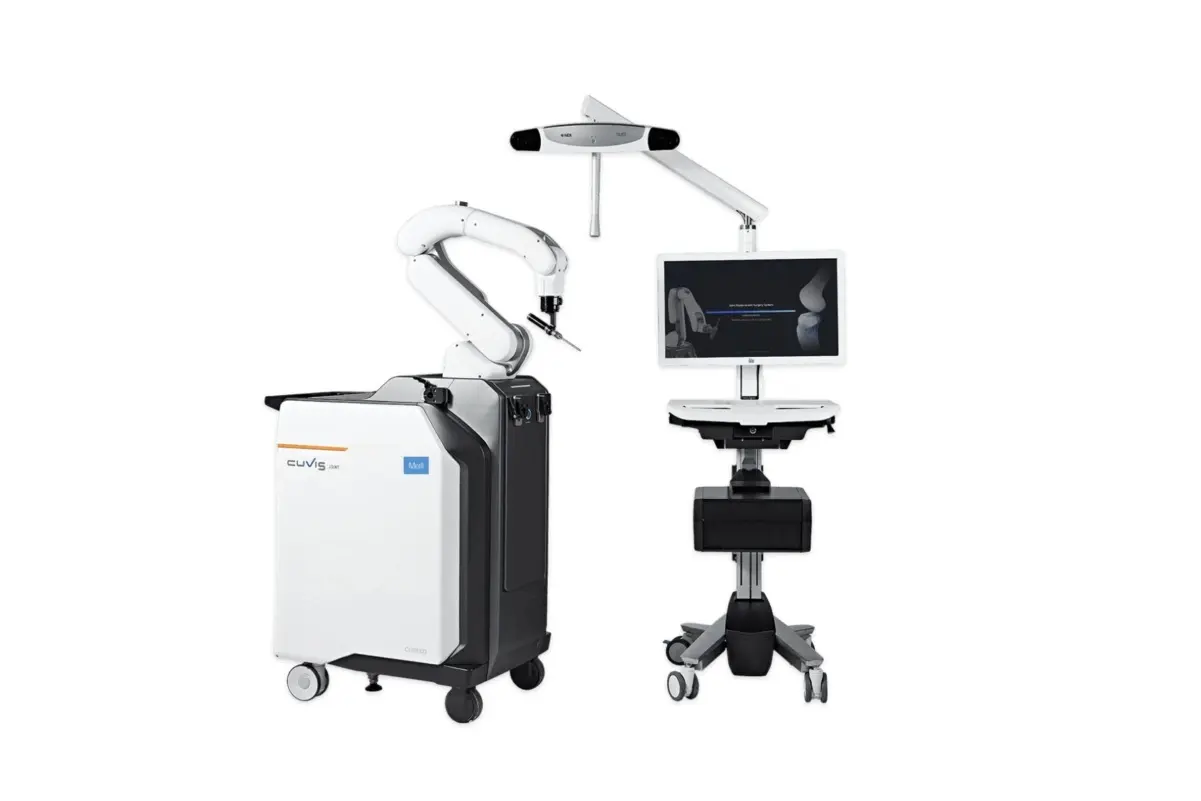
The CUVIS III gen robotic Joint Replacement System
Dr. Patil uses the CUVIS Joint (III Generation) Active Robotic System for robot-assisted knee replacement. Here’s what it actually does, in practical terms:
- CT-based planning. A pre-surgical CT scan is converted into a digital model of your knee, allowing the surgical plan to be built around your specific bone shape rather than a standard, average template.
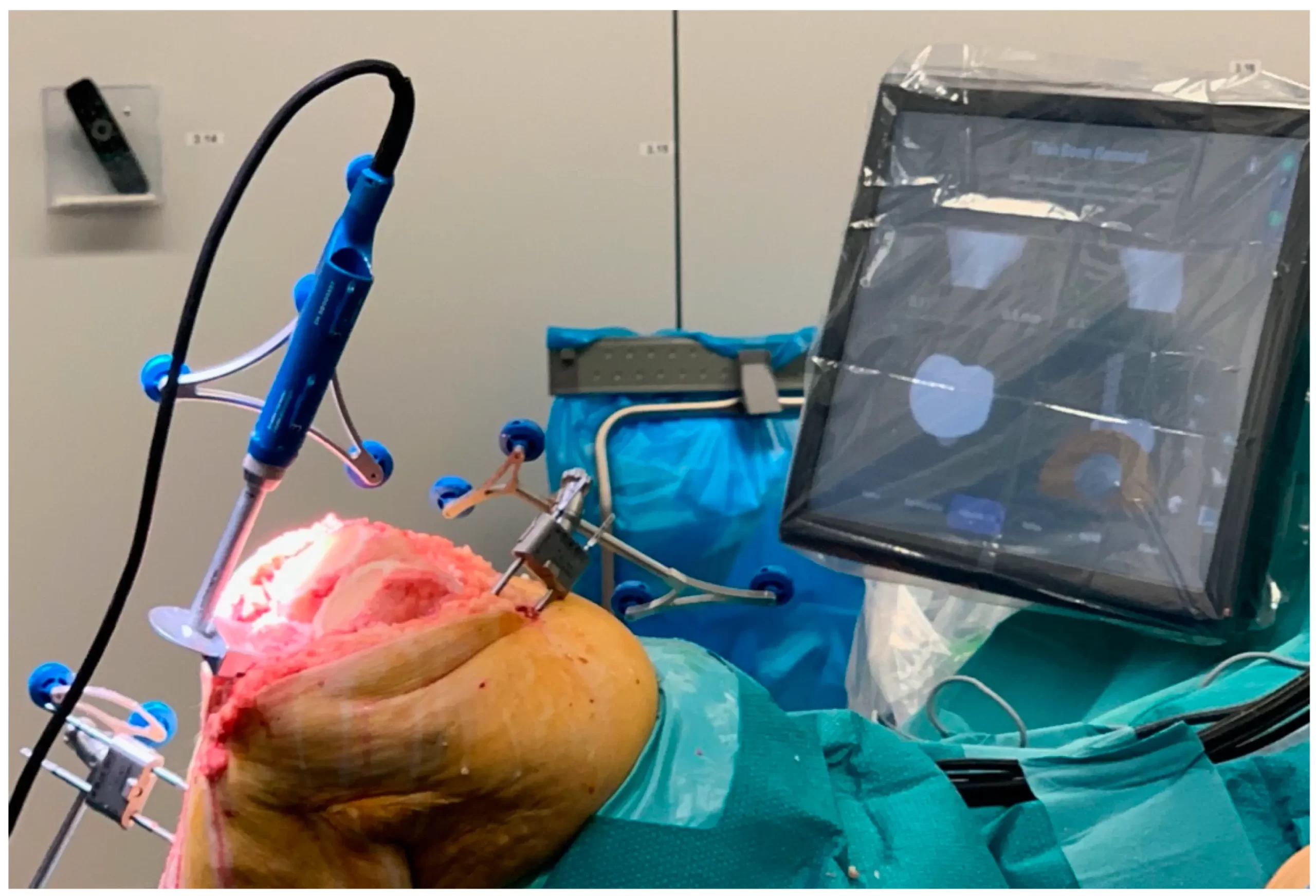
- Real-time tracking. During surgery, the system continuously checks the position of your leg against the planned model, adjusting reference points if the leg shifts even slightly — which happens naturally during any operation.
- Guided bone preparation. The robotic arm assists in preparing the bone surfaces according to the plan, staying within a safety boundary that Dr. Patil sets and controls. If the instrument moves outside that boundary, the system stops it.
- Ligament balance data. The system provides real-time information on soft tissue tension around the knee, which Dr. Patil uses to fine-tune the implant position before it’s finalized.
None of this replaces surgical skill — it supports it. The plan is only as good as the surgeon interpreting and adjusting it during the operation, which is why case experience matters when choosing a surgeon for robot-assisted knee replacement. A surgeon who has handled a thousand robotic cases has seen the range of ways real anatomy can deviate from a plan unusual bone density, prior fractures, unexpected ligament laxity and knows when to trust the plan and when to adjust it.
Robotic Knee Replacement vs. Traditional Knee Replacement
| Factor | Traditional Knee Replacement | Robotic Knee Replacement (CUVIS) |
|---|---|---|
| Surgical planning | Standard alignment guides and X-rays | Personalized CT-based 3D model |
| Bone preparation | Manual instruments and jigs | Robotic arm within a surgeon-set boundary |
| Alignment check | Visual and manual assessment | Cross-checked against the plan in real time |
| Ligament balancing | Assessed manually during surgery | Supported by real-time tension data |
| Track record | Decades of long-term outcome data | Growing evidence base with strong short- and mid-term results |
| Typical cost | Generally lower | Generally higher, due to planning and technology |
Both are legitimate options. Which one is right for you depends on your knee anatomy, the degree of deformity, and a direct conversation with your surgeon about your goals.
Conditions That May Require Knee Replacement
- Osteoarthritis of the knee (the most common reason for surgery)
- Rheumatoid arthritis affecting the joint
- Post-traumatic arthritis following an old injury or fracture
- Significant knee deformity linked to joint degeneration
- Cases where medication, physiotherapy, and injections no longer provide adequate relief
Knee arthritis doesn’t affect every patient the same way. Some notice pain mainly on stairs or inclines; others feel it even at rest, or notice the knee giving way unexpectedly. The pattern and severity of symptoms, alongside imaging findings, help determine not just whether surgery is needed but which type of replacement is appropriate.
Total Knee Replacement vs. Partial Knee Replacement
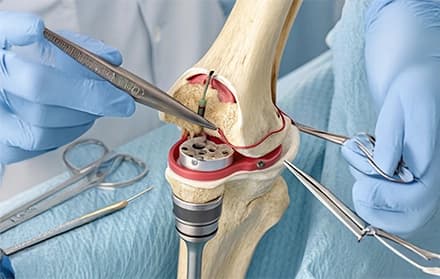
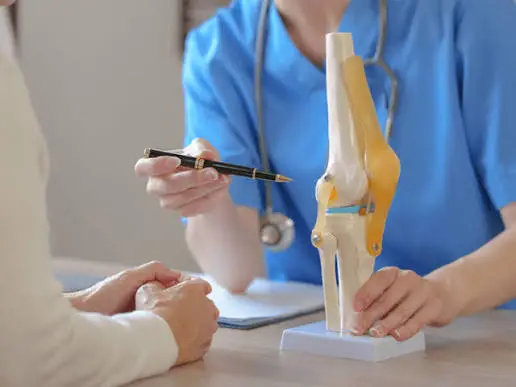
Not every arthritic knee needs the entire joint replaced. Total knee replacement resurfaces the whole joint and is used when damage affects multiple compartments of the knee. Partial knee replacement addresses only the damaged section — usually the inner (medial) compartment — while preserving healthy bone and ligaments elsewhere in the joint.
Partial replacement generally means a smaller incision and, for the right candidate, a somewhat faster early recovery. It is only appropriate when arthritis is limited to one compartment and surrounding ligaments are intact — an X-ray and clinical exam are needed to determine which category you fall into.
Who Is a Candidate for Robotic Knee Replacement?
You may be a candidate if you have:
- Persistent knee pain limiting walking, stairs, or daily activity
- Pain that hasn’t responded adequately to medication, physiotherapy, or injections
- Visible knee deformity associated with arthritis
- X-ray or MRI evidence of significant cartilage loss or joint space narrowing
A clinical evaluation and imaging review are needed to confirm candidacy — this list is meant to help you decide whether a consultation is worthwhile, not to replace one. It’s also worth knowing what candidacy does not depend on: patients are sometimes told elsewhere that their age, weight, or an unrelated health condition rules out surgery entirely, when in fact a fuller evaluation shows otherwise. Each of these factors affects planning and risk management, not automatic exclusion.
What to Expect Before, During, and After Robotic Knee Surgery

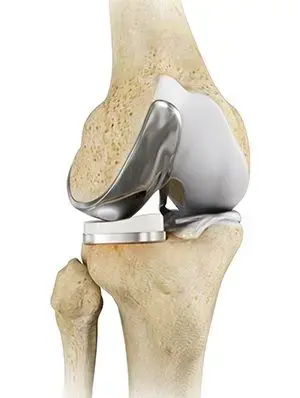
Before surgery: A clinical evaluation, X-rays, and a CT scan for CUVIS surgical planning. Pre-anesthesia fitness tests are done based on your age and health profile, and Dr. Patil reviews the finalized surgical plan with you.
During surgery: The procedure typically takes 60 to 90 minutes per knee under spinal or general anesthesia. Reference markers are placed on the leg so the robotic system can track its position against the plan. Dr. Patil performs the bone preparation, ligament balancing check, and implant placement personally, using the CUVIS system for guidance at each stage.
After surgery: Most patients stand and take assisted steps within 24 hours. Hospital stay is typically 4 to 5 days, with physiotherapy starting almost immediately.
Knee Replacement Recovery Timeline
| Time After Surgery | Typical Progress |
|---|---|
| Day 1 | Standing and assisted walking with a walker |
| Day 2–3 | Increasing walking distance; physiotherapy in full swing |
| Day 4–5 | Usual hospital discharge |
| Week 2 | Wound check; walking distance continues to improve |
| Week 3–4 | Managing stairs with support for most patients |
| Week 6 | Noticeable gains in daily function |
| Week 8–12 | Many patients resume driving, once cleared by their surgeon |
| Month 3–6 | Continued strength gains; most report significant pain relief |
Recovery speed varies with age, general health, and how closely physiotherapy is followed — this table reflects typical ranges, not a guarantee for every patient.
Why Alignment Precision Matters
A knee implant that sits even a few degrees off the correct alignment can cause uneven weight distribution across the joint, which over years can lead to faster wear or persistent discomfort. This is the practical reason precision planning matters — not because it makes surgery sound more advanced, but because it narrows the margin for the kind of small variance that manual technique alone can introduce.
CT-based planning gives Dr. Patil a model built from your actual bone geometry rather than a standard alignment guide. The robotic arm then helps translate that plan into the operating theatre with mechanical consistency. This doesn’t remove the need for surgical judgment — ligament tension, bone quality, and unexpected findings during surgery still require a surgeon’s experience to interpret and adjust for. Precision technology and surgical skill work together; neither replaces the other.
Rehabilitation After Surgery
Physiotherapy is not an optional add-on after knee replacement — it’s central to getting the outcome the surgery is meant to deliver. A typical program includes:
- In-hospital physiotherapy, starting within 24 hours, focused on safe early mobilization
- A home exercise program for the first 4 to 6 weeks, targeting range of motion and quadriceps strength
- Gait training to correct your walking pattern as strength returns
- Progressive strengthening from around week 3 onward, paced to your recovery
- Functional practice — stairs, sitting and standing, uneven ground — typically introduced around week 6 to 8
Patients who stay consistent with physiotherapy generally regain function faster and more completely than those who stop once the acute pain subsides.
Risks to Discuss With Your Surgeon
As with any joint replacement, robotic knee replacement carries risks that should be discussed directly and honestly before surgery, including infection, blood clots, temporary stiffness, and — rarely — nerve or blood vessel injury. Robotic assistance improves alignment precision, but it does not eliminate these general surgical risks. Your individual risk profile depends on age, overall health, and bone quality, and is worth a frank conversation at your consultation rather than a generic risk list.
Knee Replacement Cost in Mumbai
The knee replacement surgery cost in Mumbai can be higher for robotic-assisted procedures because of CT-based surgical planning, advanced technology, and robotic system usage. The final cost varies from patient to patient depending on several factors:
- Type and brand of knee implant
- Robotic or conventional knee replacement
- Hospital room category (general, semi-private, or private)
- Single or bilateral knee replacement
- Length of hospital stay
- Surgeon and hospital charges
- Insurance coverage and cashless facility
Instead of quoting one fixed amount that may not apply to every patient, Dr. Patil’s team provides an itemized cost estimate after consultation and necessary imaging. The estimate can include surgeon fees, hospital charges, implant cost, physiotherapy, and other applicable expenses, along with guidance regarding insurance and EMI options where available.
Patient Feedback after Knee Replacement Surgery
FREQUENTLY ASKED QUESTIONS
Is robotic knee replacement better than traditional knee replacement?
Both work well. Robotic surgery uses a personal plan made from your own scan, which can make the alignment more accurate. Traditional surgery has been used for decades with strong results too. Your surgeon can tell you which one suits your knee best.
Does the robot perform the surgery?
No. The surgeon does the surgery. The CUVIS robot helps with planning and guides the surgeon's hand for better accuracy, but the surgeon stays in control at all times.
Is robotic knee replacement painful?
You won't feel pain during surgery because you'll be under anesthesia. After surgery, there will be some pain, but medicines control it well. Most of the pain eases within one to two weeks.
How long does the surgery take?
Usually 60 to 90 minutes for one knee. It can take a bit longer in more complex cases.
How soon can I walk after Robotic knee surgery?
Most patients stand and take a few steps with help within 24 hours of surgery.
How long does a knee replacement implant last?
Most implants last 15 to 20 years or longer. This depends on the implant type, your activity level, and your overall health.
What is the cost difference between robotic and traditional knee replacement?
Robotic knee replacement generally costs more than traditional surgery due to the CT-based planning and technology involved exact costs depend on hospital, implant choice, and individual case complexity.
What is the youngest age for robotic knee replacement?
There is no fixed minimum age the decision depends on the severity of joint damage and how much non-surgical management has already been tried, since younger patients typically try conservative options first.
What is the difference between robotic and computer-navigation knee replacement?
Navigation systems guide the surgeon but don't move any surgical tools. Robotic systems like CUVIS use a robotic arm to help carry out the bone cuts, while the surgeon stays in full control.
Is robotic knee replacement covered by insurance?
Many insurance plans cover knee replacement, including robotic surgery. Coverage details vary, so it's best to check directly with your insurance provider.
Where does Dr. Shailendra Patil perform surgery?
At Aditi Hospital Mulund Mumbai and Curre Hospital Thane. You'll get the exact location and appointment time when you book a consultation.
How long is the hospital stay for robotic knee replacement?
Usually 4 to 5 days, depending on how quickly you recover.
Will I need physiotherapy after robotic knee replacement?
Yes. Physiotherapy is a must after any knee replacement. Skipping it can lead to stiffness and a slower recovery.
Can both knees be replaced at the same time robotically?
Yes, both knees can be replaced during the same robotic surgery in some patients. However, this depends on your overall health, age, and medical condition. Dr. Shailendra Patil will carefully evaluate you and recommend whether replacing both knees at the same time is the safest and best option.