
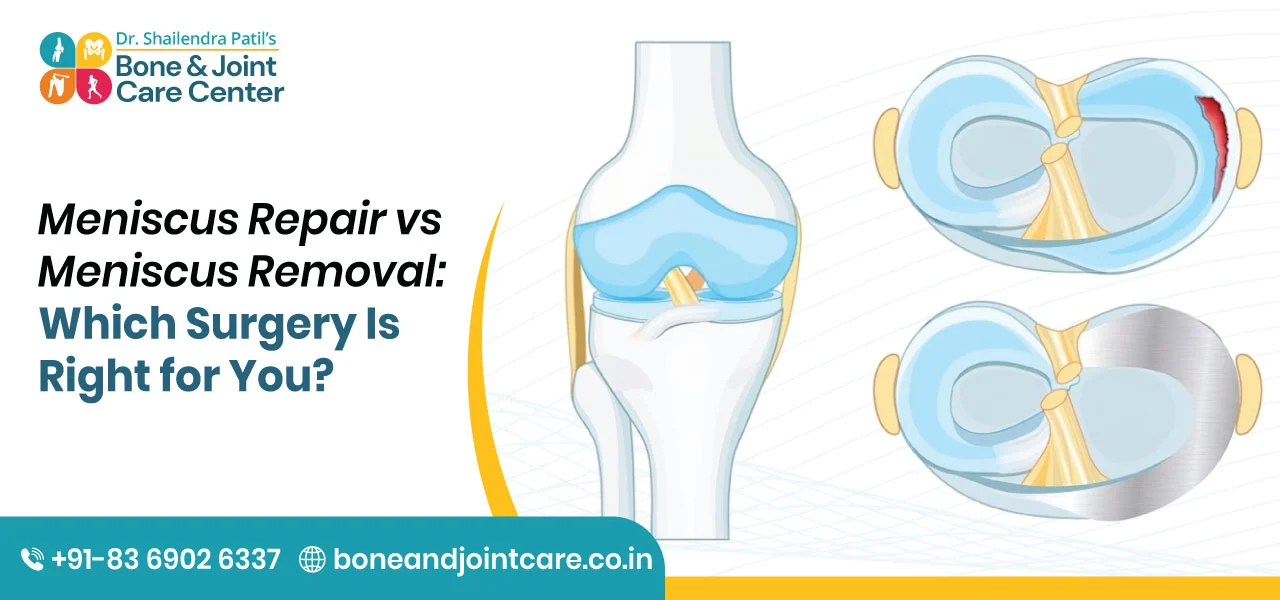
Each of your knees contains two menisci, both of which are responsible for reducing friction during movements, absorbing shock, and protecting cartilage to ensure smooth movement of your knee joint. They are C-shaped pieces of cartilage, located on the inner and outer sides of your knee. When this natural shock absorber is torn, your knee might lose its stability.
Common symptoms include sharp pain, swelling, stiffness, along with a “giving way” sensation. It’s normal to wonder whether an orthopedic surgeon in Thane can repair the torn meniscus or remove it altogether to restore your knee’s normal function. The answer isn’t simple.
Does a Meniscus Tear Always Require Surgery?
No, not all torn menisci require surgical treatment. Many heal on their own with conservative treatments, such as medication and the RICE (rest, ice, compression, and elevation). Surgery may be discussed if you have persistent knee pain despite conservative treatments and rest.
A large, unstable tear, especially in adults who have sustained injury during physical activities, might require surgery to preserve the meniscus. Discuss meniscus surgery cost in Thane along with procedure details, recovery, and benefits before proceeding.
When is Meniscus Repaired?
Since a meniscus acts as a shock absorber and knee stabilizer, an orthopedic surgeon may try their best to preserve as much of this tissue as possible. During meniscus repair surgery, the surgeon stitches the torn edges of the cartilage and closes the incision, allowing the area to heal and continue its function.
Typically, a tear in the “red zone” area, which receives adequate blood supply, can heal perfectly. You are also a good candidate for a surgical meniscus repair if this portion of your meniscus is torn. In contrast, tears in the “white zone” (the inner portion) of the knee do not receive a direct blood supply and are thus less likely to heal.
What is Meniscus Removal?
Meniscus removal involves surgically removing the damaged parts of the meniscus, while preserving healthy tissues. Total meniscus removal is quite uncommon today, as the risk of arthritis increases drastically without a meniscus. The procedure can be conducted through a minimally invasive, keyhole surgery, called arthroscopy.
The orthopedic surgeon smooths out the torn edges and removes the extremely unstable or broken fragments to ensure smooth, friction-less knee movement. The surgery is mainly recommended for adults facing knee “locking” or “giving way” due to large tears.
Which is Better? Meniscus Repair or Removal
There’s no single best procedure. What’s best for you depends on the extent of the tear and the blood supply in the area that’s torn. Mostly, the surgeon will repair the meniscus to preserve your long-term knee support.
Severe, degenerative tears, particularly injuries in the “white zone,” may not respond well to the repair, increasing the risk of a repeat surgery.
In such cases, partial meniscus removal can offer better symptom relief. That said, meniscus removal can put pressure on your knee joint. Without proper cushioning, daily activities can become a little difficult, especially if a major portion of the meniscus was removed.