
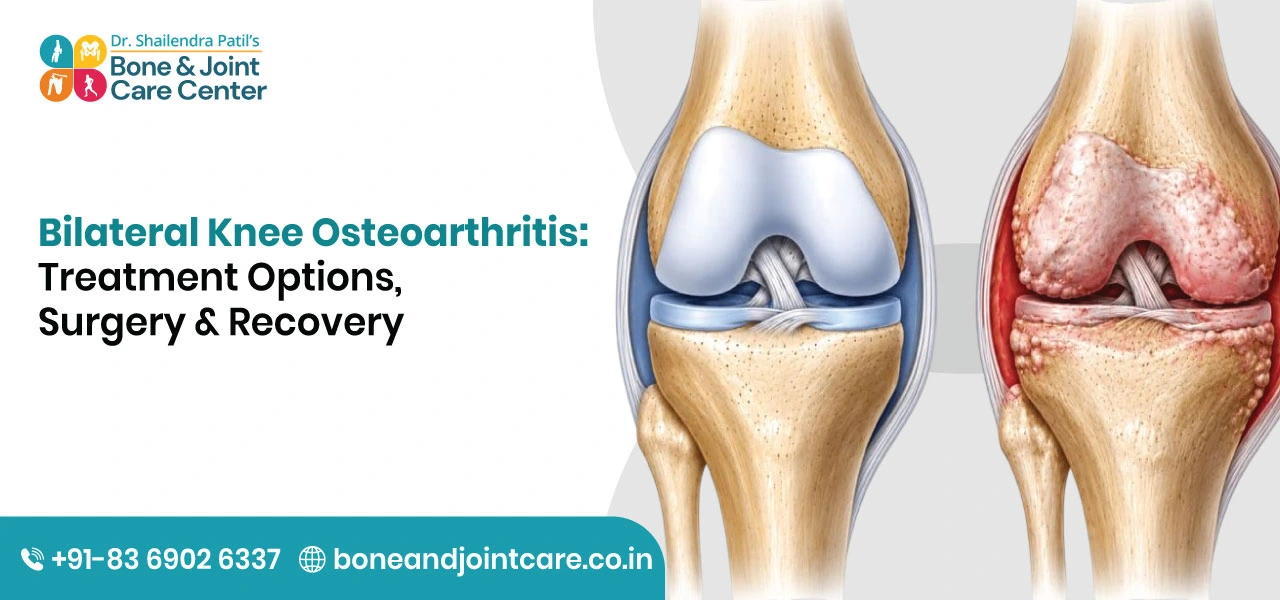
Bilateral knee osteoarthritis can be managed with non-surgical approaches, such as medication, injections, activity modification, and physiotherapy. However, for advanced-stage disease, surgery to replace the damaged surface of the knee joint may be required.
Bilateral Knee Osteoarthritis: Treatment Options, Surgery & Recovery
When the cartilage, the tissue cushioning the ends of your bones, wears down, the bones may start to rub against each other as you move the affected joint, causing pain and stiffness. The condition is called osteoarthritis.
Bilateral osteoarthritis, as the name suggests, affects both knees. It can make daily activities and simple tasks, such as walking short distances, climbing stairs, or standing for a while, painful. Bilateral osteoarthritis doesn’t necessarily require surgery. An orthopedic doctor in Thane will start treatment conservatively and discuss surgery when it’s necessary.
Symptoms of Bilateral Knee Osteoarthritis
The most common sign that pushes people to visit an orthopedic specialist is persistent pain in both knees. Initially, the pain occurs when performing certain physical activities, particularly those that put pressure on the knees. In advanced osteoarthritis, the pain can occur even while resting.
Let’s check out other common symptoms of bilateral knee osteoarthritis.
- Stiffness in both joints, especially after waking up
- Swelling around the affected joints
- A grinding or crackling sensation when moving the knees
- Knee feeling weak or unstable
- Reduced activity
Since the condition affects both knees, a common sign that people with bilateral osteoarthritis notice is increased immobility because of the intense pain and swelling in both knees.
Treatment Options for Bilateral Osteoarthritis
Although osteoarthritis can’t be cured, the symptoms can often be managed with non-surgical approaches. Here are less-invasive arthritis treatment options in Thane:
Pain-Relief Medicines: Topical NSAIDs can offer some relief from intense pain without oral drug exposure, but if that doesn’t work, your doctor may prescribe oral pain-relief medication.
Corticosteroid Injection: When medication doesn’t provide adequate relief, a more advanced approach may be considered. Corticosteroid injections can be used as a short-term pain relief option, but they can’t treat the underlying degeneration of the cartilage.
Physiotherapy: Another helpful treatment option is physiotherapy. It helps strengthen the core muscles supporting the knee and hip joints.
Surgical Treatment for Bilateral Osteoarthritis
When there’s significant cartilage damage, surgery to replace the damaged surface of the knee joint with prosthetic components may be an appropriate treatment option. Instead of removing the entire joint, the surgery replaces only the damaged ends of the bones and carefully implants your chosen prosthetic components on the prepared surfaces.
Some patients are suitable for bilateral knee replacement surgery, in which both affected joints are replaced simultaneously. Others may need staged bilateral knee replacement, where one joint is operated on first, and the other is replaced after you have recovered. The best approach depends on your individual health, severity of the joint disease, and recovery.
Recovery from Bilateral Knee Replacement Surgery
Recovery can take time if you have simultaneous bilateral knee replacement. The first few weeks can bring pain and swelling. Take your prescribed pain-relief medication, walk with assistive devices, and follow your doctor’s instructions regarding activity restrictions.
Many people notice substantial improvement in their mobility within six weeks, although the knee continues to heal for several months.