
Physiotherapy, medication, and non-surgical treatment may be effective for minor discomfort after joint replacement surgery. A revision surgery is required if you have a fracture around the implant, a loosened implant, or you experience significant knee instability.
When is Revision Joint Replacement Needed?
Being told that you need a joint replacement surgery in Mumbai can seem overwhelming. After having gone through a major hip or knee replacement operation, the last thing you want is to have another surgery because the replacement failed.
Most modern implants are made of robust materials and are tailored to your knee anatomy. However, they aren’t permanent. In this post, we’ll look at the five common reasons why you may need a revision joint replacement.
Why You May Need a Revision Joint Replacement Surgery
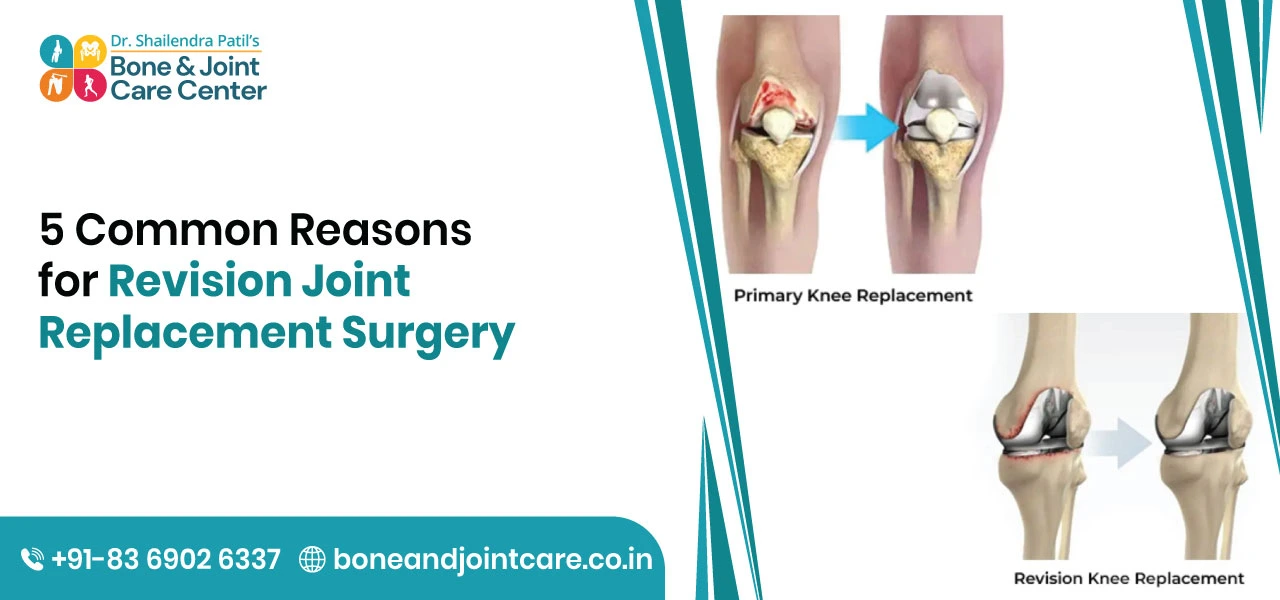
When the original implants do not provide the expected stability or become a source of intense pain and mobility issues, a revision surgery could be a reasonable treatment option. It involves removing and replacing the damaged components with new implants.
It’s more complex than the original joint replacement surgery, as the surgeon has to carefully work around the weakened tissues, muscles, and bones. The surgery involves identifying the damaged components, removing them, repairing the surrounding tissues, and implanting new components in their place.
Let’s look at some common reasons that indicate the need for a revision surgery.
-
Implant Loosening
The surgeon may attach the implant to your bone using two methods. They may use cement to fix it in place or use a material with a porous surface, which allows the surrounding bone to grow into it.
Over time, this connection can loosen, causing pain, reduced mobility, and joint instability. An orthopedic surgeon in Mumbai may perform joint replacement revision surgery where stronger implant components are used to replace the loosened material.
-
Joint Infection
Joint infection can start right after you have undergone a replacement surgery or later. Either way, it’s considered serious and may almost always require surgical treatment. Infection develops when bacteria travel through your bloodstream to the replaced joint and settle there.
It’s generally a two-stage process procedure. First, the infected area is cleaned, the implant is removed, and the antibiotic spacer is placed. This is followed by another surgery, where a new implant is positioned.
-
Joint Wear and Tear
Modern joint implants are made up of robust materials that are designed to last for several years without causing pain or mobility issues.
However, frequent use and repeated stress can cause wear over time. A revision surgery is recommended when the implant is significantly damaged or is causing pain, instability, and other issues.
-
Joint Instability
If the soft tissues around the implant, including your muscles and ligaments, do not support the implant, or the implant wasn’t aligned and positioned perfectly in the previous replacement surgery, the joint might feel unstable or like it’s ‘giving way’. This usually requires a revision joint replacement.
-
Fracture
A simple fracture in the bone around the implant can be repaired with screws and plates, without removing the implants. Complex or dislocated fractures that move the bone out of alignment may require surgical intervention.