
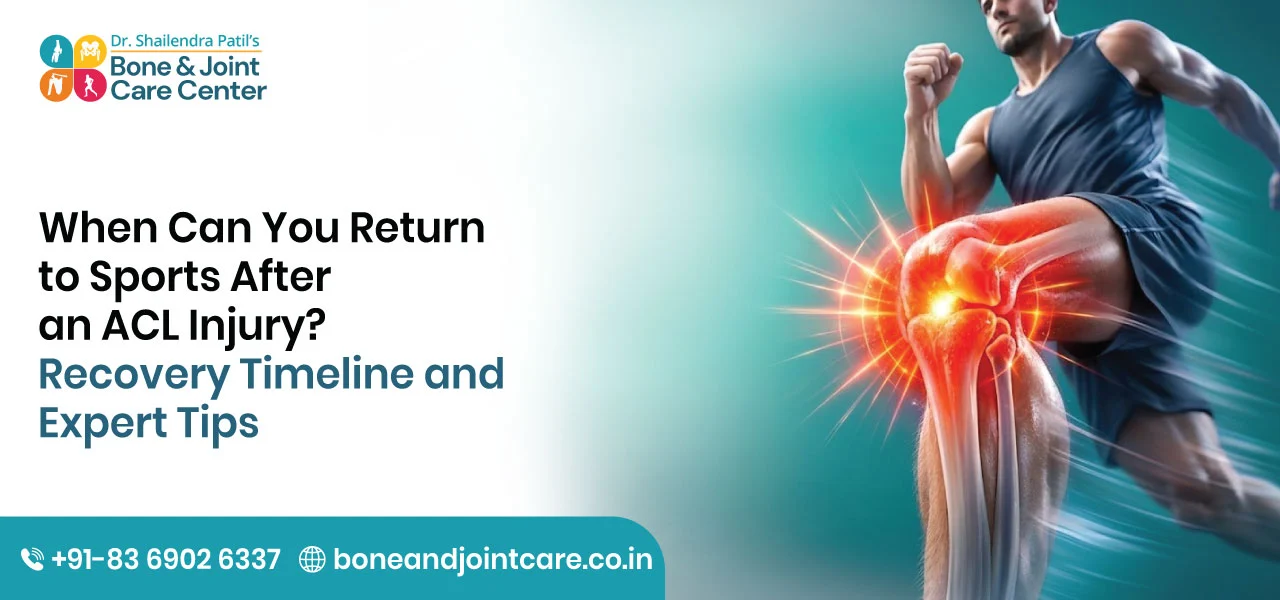
One of the most common sports injuries in athletes is a torn ACL. The Anterior Cruciate Ligament stabilizes your knee joint, preventing it from moving in unusual directions. A torn ACL isn’t just painful, but it can cause swelling, knee instability, and difficulty moving the knee.
Depending on the severity of the tear, some athletes require ACL surgery in Mumbai while others find relief with conservative treatments. For athletes with a torn ACL, the most commonly asked question is “when can I return to sports”?
How Soon Can You Return to Sports After ACL Reconstruction?
There’s no fixed timeline. You can’t just count months until you can get back to your favorite sports. Recovery may vary from patient to patient.
When you can resume athletic activities depends largely on whether you are hitting the clinical and functional milestones, how fast your knee heals, whether you can walk or move the affected joint confidently, and the level of strength and mobility you have regained after surgery.
Before returning to sports, it’s best to get an all-clear from your ACL reconstruction surgeon in Mumbai.
Recovery Phase 1: Managing Pain and Swelling
The early phase (0-6 weeks) after ACL surgery focuses on minimizing the swelling, controlling pain, and straightening your knee. You may walk with crutches initially until the swelling settles and pain is managed.
You will gradually start walking without support. Physiotherapy begins soon after surgery, and focuses mainly on activating your quadriceps and regaining muscle strength.
Recovery Phase 2: Building Strength and Balance
You will notice gradual improvements in swelling and your mobility by the 6th week. As movements become less painful and more comfortable, the rehabilitation plan will shift to strengthening muscles and building balance and control.
The therapist may start exercises that target your quadriceps, glutes, hamstrings, and calf muscles. High-impact activities, such as weightlifting, jumping, running, and exercises that might put excessive stress on the knee joint or involve sudden movement, are still restricted. Walking and cycling are encouraged, only if you feel comfortable.
Recovery Phase 3: Building Running Skills
If your knee has regained strength and mobility, your physiotherapist may gently introduce strength-training and high-impact activities, such as running. The phase focuses on a gradual return to sports, although you can’t yet practice activities that involve pivoting, sudden stops, or quick turns.
Recovery Phase 4: More Demanding Exercises
By 6-9 months, your treated knee must regain movements similar to the other knee. Swelling and pain drastically improve at this point, but some people may still experience mild swelling or occasional discomfort, especially after high-intensity exercises.
Your operated leg must have strength and control close to the uninjured leg. While jumping, running, sprinting, and changing directions might all begin, most athletes are still not completely ready for sports.
Recovery Phase 5: Return to Sports
By 9-12 months, your surgeon may permit you to resume sports if you pass the functionality, strength, stability, and movement test. That said, some athletes require longer to return to demanding sports.