
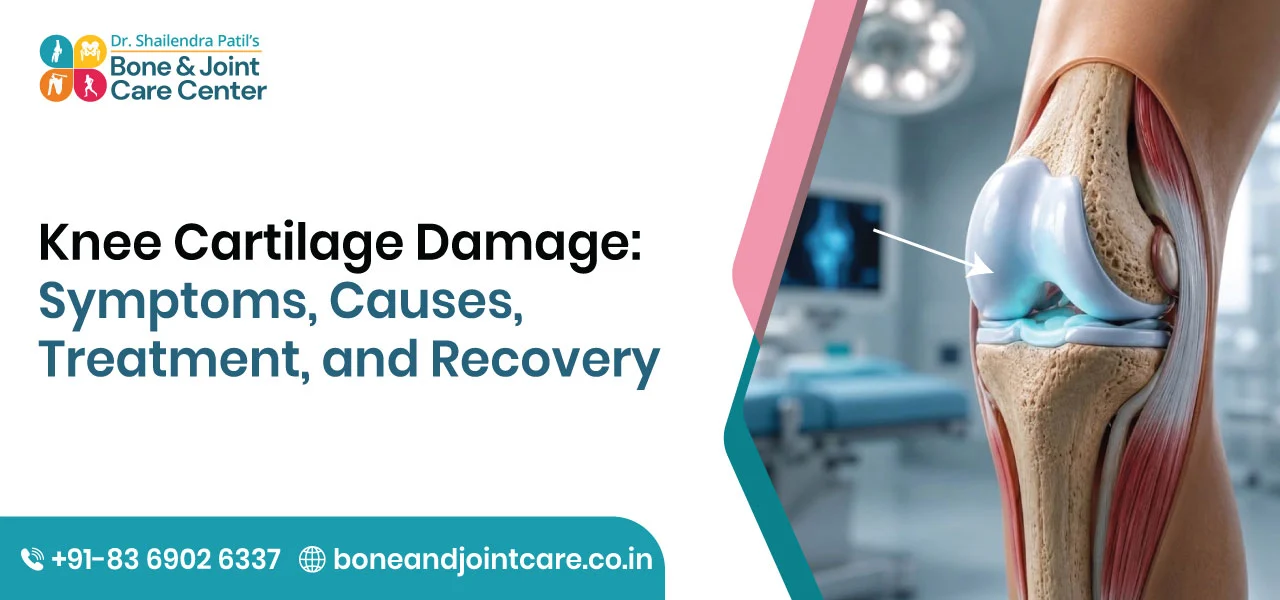
Your knee joints are cushioned by cartilage, a smooth connective tissue that supports movements, absorbs shocks, and prevents your bones from rubbing together. Any damage to this cartilage, whether because of a chronic joint condition, such as arthritis, or a sudden blow to the knee joint, can affect your movements.
Knee cartilage damage treatment in Mumbai includes medication and, in some cases, surgical treatment to repair severely damaged cartilage. Let’s understand symptoms, causes, and treatment for knee cartilage damage.
Symptoms of Knee Cartilage Damage
Symptoms of an injured knee cartilage can vary between patients and usually depend on the extent of the damage. Some have mild symptoms, while others experience excruciating pain, which might require invasive treatment approaches. Let’s look at some common symptoms:
- Pain in the affected knee when standing, walking, running, squatting, or performing other physical activities
- Swelling due to fluid accumulation in the joint
- Stiffness in the knee
- A clicking sensation in the knee
- Difficulty bending or straightening the knee
- A feeling like your knee might give way
Causes of Cartilage Damage
Here are some common causes of knee cartilage damage:
1. Injuries
Sudden twisting or turning can tear the meniscus or other supportive structures in your knee joint. Likewise, a fall from a height, a blow to the knee, awkward landing, or sudden change in direction can all injure your cartilage, sometimes along with other ligaments.
2. Osteoarthritis
This chronic condition causes the smooth ends of the cartilage to wear down over time. The cartilage, which lets the bones slide against each other and allows frictionless movement, can get thinner and rougher.
3. Repetitive Stress
Athletes or others who practice poor movements repetitively or put excessive strain on the knee joint every day are at a greater risk of cartilage wear down. That said, physical activity itself isn’t harmful. In fact, exercising can actually improve your joint function. The problem can occur when you lift heavy weights with poor posture or perform exercises without proper guidance.
4. Obesity
Your knee bears your entire body’s weight, which is why people with a high BMI have a higher risk of developing chronic knee pain due to increased mechanical load on the knee. Excessive weight can also speed up osteoarthritis progression.
Treatment of Knee Cartilage Damage
For mild knee injuries, a knee specialist in Mumbai might recommend watchful waiting and rest. They may also advise cold compresses, gentle movements, pain-relieving medication when appropriate, and temporary use of a walking aid to avoid pressure on the affected knee, at least until the swelling comes down and pain eases up.
- Physiotherapy: Your knee surgeon might recommend physical exercises to support the muscles around your knee joint. This improves your mobility, reduces pain, and prevents further joint damage.
- Injections: In selected cases, corticosteroid injections can be used to relieve pain and inflammation associated with cartilage damage. However, they do not heal the damaged cartilage. The dose is carefully decided based on the extent of damage, your symptoms, age, and other factors.
- Surgery: If your symptoms do not improve with conservative treatments, removing the damaged part of the cartilage and repairing the rest of the tissue may be the most appropriate treatment choice.