Even the slightest problem in your knees can affect your overall mobility. Many patients diagnosed with arthritis experience not just chronic knee pain, but also a restricted range of motion.
Medication and physical therapy can provide relief to some degree initially. However, if severe joint damage has made even the simplest activities, such as standing or resting, painful, you may need to consult a robotic knee surgeon in Mumbai. Robotic knee replacement has become widely adopted today. Here’s more about it.
Robotic Knee Replacement Surgery: A Quick Look
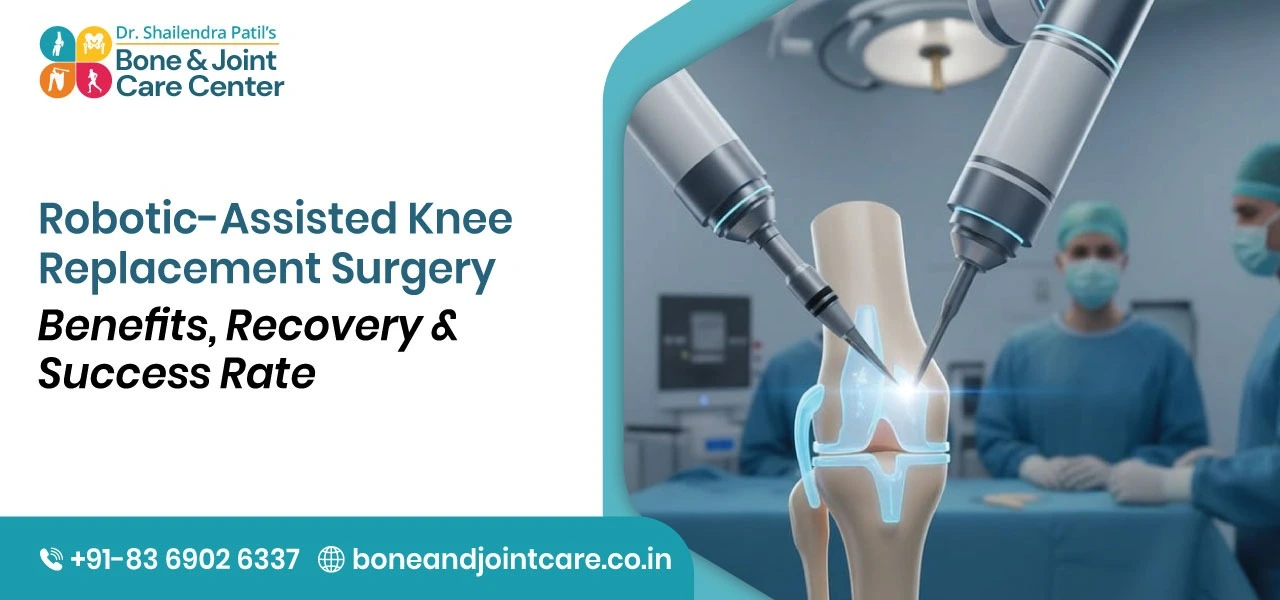
Robotic knee replacement is exactly what the name suggests. It’s an advanced surgical approach, which involves creating clear, 3D pictures of your knee, planning every aspect of the surgery, such as implant size and positioning, and using a robotic arm to achieve the highest degree of precision during the operation.
The goal is the same: to remove the damaged parts of the knee joint and replace them with artificial implants. This relieves chronic knee pain, improves the patient’s range of movements, and provides long-lasting relief.
Does the Robot Perform the Surgery?
It’s important to know that robots do not operate independently. Think of it as the extra sets of hands and eyes that assist the surgeon in planning and executing knee replacement. The surgeon remains in full control of the surgery while achieving better precision.
The surgeon makes necessary decisions before and during the surgery. This modern technique helps make every movement aligned with the planned procedure, minimizing even the slightest deviations. This level of consistency is usually not possible to achieve manually.
Benefits of Robot-Assisted Knee Replacement
- Better Planning: Every patient has a unique knee anatomy. CT scans and other imaging techniques allow surgeons to get a closer look at the patient’s knee anatomy. This helps determine the ideal size of the implants and their placement beforehand.
- Faster Recovery: The biggest benefit of using a robotic arm is less trauma to healthy tissues and bone. More accurate bone cuts translate into less damage to the surrounding tissues and nerves. This, in turn, means less post-operative pain.
- Low Risk of Errors: Although the conventional surgical approach is highly effective, manual errors are possible. Robotic systems minimize the risk of these manual errors by assisting the surgeon during surgical planning and implant positioning.
Recovery After Robotic Knee Replacement
Patients are advised to start moving using a walking aid within hours of knee replacement. This supports blood circulation, prevents blood clots, and aids healing. Physiotherapy starts during your hospital stay and continues until full recovery.
Pain medication helps manage pain, while physiotherapy strengthens your surrounding muscles and gradually restores your movements. Hospital stay can be 1-3 days, depending on your individual recovery status.
Many patients are able to perform gentle movements within 4-6 weeks. To learn more about knee replacement surgery cost in Mumbai, recovery, and success rates, contact Dr. Shailendra Patil.