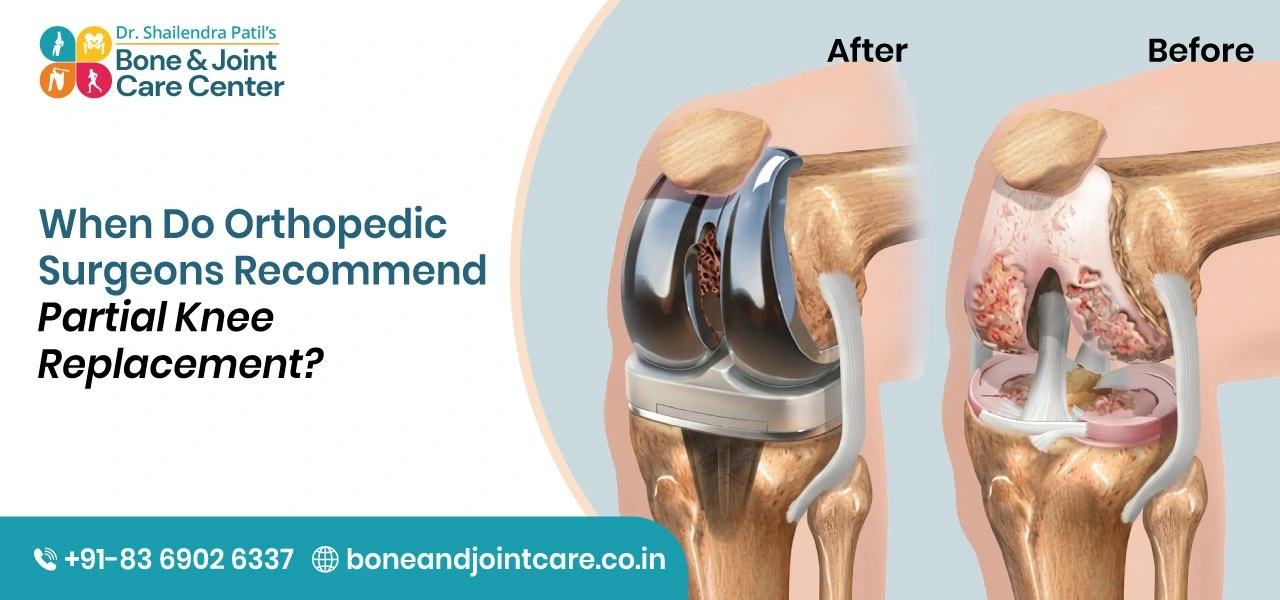
Medication, lifestyle changes, and physical therapies may help relieve knee pain to some degree. But when the damage to the knee joint or surrounding structures progresses, or the pain starts interfering with your everyday life, a knee specialist in Mumbai might recommend a surgical intervention.
The most common procedure is total knee replacement. However, a growing number of people have been considering partial knee replacement, which replaces only the damaged knee joint, preserving the healthy cartilage, ligaments, and nearby tissues.
Partial Knee Replacement: What Is It?
Your knee consists of three vital compartments: Medial (inner part), Lateral (outer part), and patellofemoral (kneecap). Damage to any of these compartments due to arthritis may not always require complete replacement. If only one compartment is damaged, the surgeon can replace the bone and cartilage with plastic, metal, or other implants.
Partial knee replacement is less common in knee replacement procedures, but has become a reliable option for younger patients lately. It leaves healthy tissues in place, thus providing faster recovery. Another major advantage is that it supports natural knee function.
When is Partial Knee Replacement Recommended?
Not every candidate is ideal for partial knee replacement. Your orthopedic surgeon will carefully evaluate your test reports, overall health, goals, and other factors before considering partial knee replacement surgery in Mumbai.
- Only One Compartment is Affected: Osteoarthritis can wear away your cartilage over time. If MRI or other scans show damage to only a single compartment of your knee joint, you may be a good candidate for partial knee replacement.
- Conservative Treatments have Failed: Knee replacement is often not the first-line treatment for knee pain. Your orthopedic surgeon may try conservative treatments, such as pain relief and anti-inflammatory drugs, physical therapy, weight management, and lifestyle modifications. When these no longer work, a partial knee replacement can be considered.
- Pain Interferes With Your Daily Life: Surgery isn’t needed for occasional knee pain, but if the pain becomes persistent or starts affecting simple activities, such as walking short distances, climbing stairs, or pursuing your hobbies, surgical treatment may be required.
- Your Knee is Stable: Anterior Cruciate Ligament and other supporting structures should be functioning well for the partial knee replacement to work. If your knee is unstable or is too damaged to be repaired with partial replacement, a total knee replacement may be more appropriate for your case.
- Good Range of Motion: Another important consideration is how well your knee can move before surgery. If you can straighten and bend the knee, a partial knee replacement might work. If your movements are severely restricted, replacing a single compartment and preserving the rest might not effectively restore your knee’s normal range of motion.
- You Want Natural Knee Movement: Many patients described the post-operative knee movement as close to normal. Since healthy ligaments and the rest of your knee structure are preserved, you can expect a natural walking pattern and improved knee function.