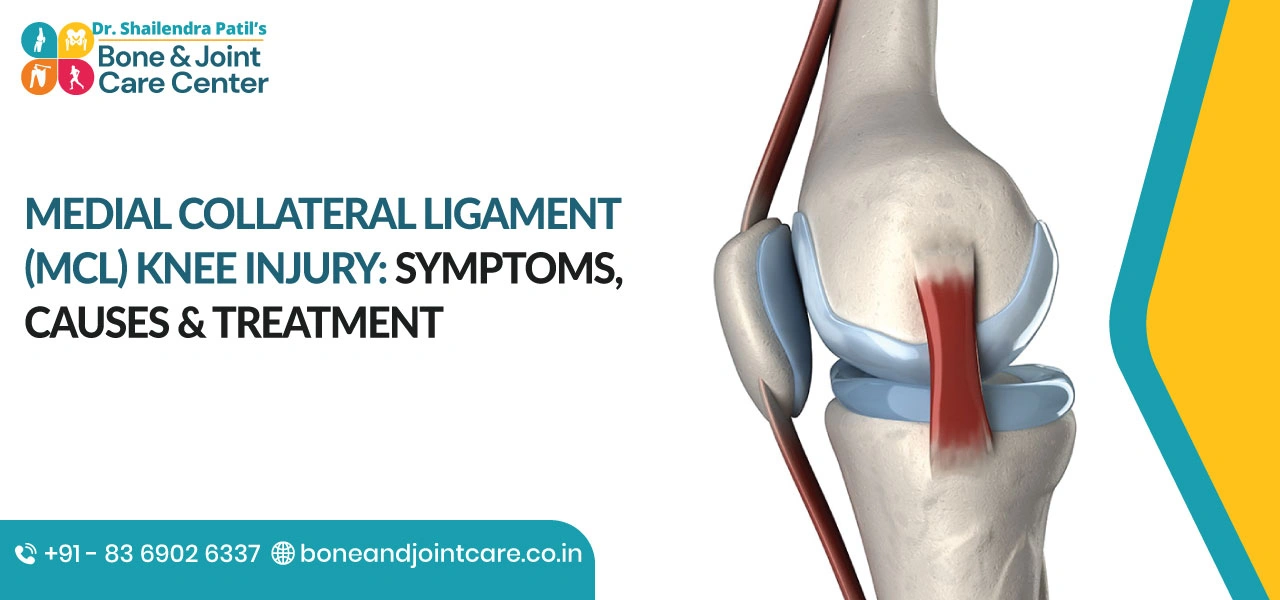
Located on the inner side of your knee, the Medial Collateral Ligament (MCL) is one of the crucial ligaments that provide stability and support to your knee joint. Its main function is to prevent excessive inward bending of your knee.
However, direct impact or sudden change of direction can stretch this ligament beyond its normal range, increasing the risk of an MCL injury. While the injury may seem intimidating, it’s usually treatable. Consider meeting the best knee surgeon in Mumbai to discuss the most suitable treatment plan based on the severity of the tear.
Grades of Tear
MCL injury can vary in severity. Some have only a few fibers stretched, while others present with partial or complete tears that make it difficult for them to bear weight on the affected joint. It’s categorized into three grades:
- Grade 1: It’s a minor tear with only a small part of the fibers stretched. You might experience pain on the inner side of the knee, but it’s usually tolerable. Conservative treatment is mostly enough for grade 1 MCL tears.
- Grade 2: A grade 2 tear means the ligament is partially torn. Some ligament fibers could still be intact and might help hold your knee together. However, symptoms are more severe compared to a grade 1 tear. Patients report swelling, bruising, and moderate to severe pain. The knee may feel unstable, especially when walking, pivoting, or performing other physical tasks.
- Grade 3: The grade 3 tear occurs when the MCL has torn entirely into two pieces. Without the MCL, the knee might feel unstable. Even normal movements, like walking or climbing stairs, can be difficult, as your knee might become wobbly or loose.
Symptoms of MCL Tear
Symptoms might appear instantly after sustaining a knee injury or develop over the next few hours. The severity depends on whether the ligament is stretched, partially torn, or completely torn. Here’s what most patients experience after an MCL tear:
- A pop sound after injury (if there’s a major tear)
- Tenderness, mild discomfort, or severe pain in the inner part of the knee
- Swelling on the affected side
- Difficulty walking or bearing weight
- Stiffness that makes it difficult to straighten or bend the affected knee
- The knee may feel unstable
Treatment for MCL Injury
Not every MCL injury requires surgery. In fact, many patients find relief with conservative treatments. The RICE approach is often effective for grade 1 tears, while for partially torn ligaments, braces, anti-inflammatory medicines, and pain-relief options may be required. The doctor may recommend crutches if you are having trouble walking normally.
Physical therapy is another major part of your recovery after an MCL Injury. Guided physical exercises will help build muscle strength, restore joint stability, and make movements smooth. MCL repair or reconstruction surgery is generally advised when therapy, medicines, and home remedies fail. Discuss ligament surgery cost in Mumbai, procedure details, and recovery before proceeding.