
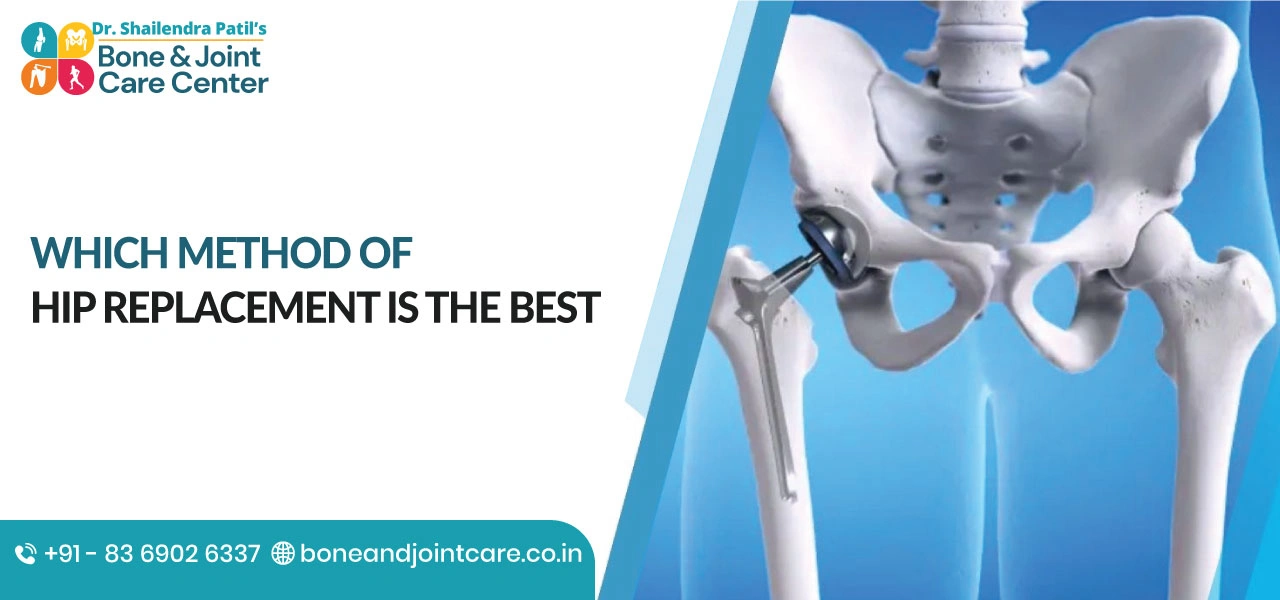
When all non-invasive medical procedures, physical therapies, and lifestyle modifications fail, hip replacement surgery in Thane seems like the only way to get rid of the debilitating hip pain.
The surgery is much more than removing and replacing the damaged hip joint with a durable artificial implant. It’s more about easing the chronic pain, restoring your mobility, and allowing you to perform your everyday duties effortlessly.
With many modern surgical techniques performed widely today, you get to choose a surgical approach that fits your case.
Common Hip Replacement Techniques
Traditional hip replacement is no longer your only option. Modern surgical techniques include robot-assisted hip surgery, known for greater precision and reduced risk of complications. Let’s explore the common ones.
Partial or Total Hip Replacement
A total hip replacement involves removing the entire hip joint, including the ball and socket, with artificial components. Depending on the implant used, your age, and surgical technique, many patients undergoing total hip replacement enjoy long-lasting results, up to 15-20 years.
Partial hip replacement removes only the damaged ball, leaving the socket in place. It can be an effective choice for older people with hip fractures. However, for those with severe arthritis or joint diseases, a total replacement might be a better option.
Anterior, Lateral, or Posterior Hip Replacement
The surgery can be performed with three common techniques – anterior, posterior, and lateral. An anterior approach is where the surgeon gets access to your hip joint from the front. This allows them to get quick, smooth access without cutting larger muscles. This further speeds up recovery, with many patients being able to walk without assistance within weeks.
For more stable results, a posterior hip replacement is considered an ideal approach. It gives a clear view of the hip structure, allowing a correct positioning of the implant. It’s also the most widely performed surgical technique.
The lateral method involves getting access to the hip joint from the side. The surgery minimizes the risk of dislocation and provides excellent visibility, but it’s associated with muscle weakness and slower recovery.
Minimally Invasive Hip Replacement
Minimally invasive hip replacement is a modern surgical technique that, instead of cutting a large part of the skin, involves smaller, multiple incisions. The surgical instruments are inserted through these small holes. Both anterior and posterior approaches can be performed with this minimally invasive surgical technique.
Robot-Assisted Hip Replacement
Robot-assisted hip replacement is a remarkable innovation in the surgical field. The technique uses robotic systems that help surgeons in planning surgery based on the patient’s unique hip anatomy, as well as in conducting the surgery with millimeter-precision.
Major benefits include better alignment, improved joint function, and better long-term stability. That said, it requires great expertise to operate a robot. If you are interested in this less invasive and advanced hip replacement surgical technique, see the best orthopedic surgeon in Thane.