

This Surgery is better than conventional Knee Replacement Surgery!
Minimally Invasive Total Knee Replacement Surgery overcomes the potential drawbacks of conventional knee replacement surgeries.
Knee replacement has proven time and again to be a highly successful and life changing surgery for elderly people who suffer from severe knee pain and for those who suffer from arthritis. However, despite the benefits offered by knee replacement surgery. Patients are often skeptical of undergoing knee surgery as they are unsure if they will be able to walk pain free after surgery or will the pain reoccur. The complete recovery time will be long and grueling requiring a lot of orthopedic and physio visits.
Minimally Invasive Total Knee Replacement surgery overcomes these apprehensions as the surgery does not involve any muscle cut nor does the patient need a general anesthesia. Significantly improving the outcome of the surgery.
This is how this Knee surgery is virtually Painless?
Knee replacement surgery patients generally face discomfort during and after surgery. This is due to the use of general epidural anesthesia. The use of Epidural helps in blocking the pain in the leg during the knee surgery. However, the drawback being, that it anaesthetizes both the leg even if a single leg is operated. The effect of this epidural last for longer time and leaves numbness in both legs. The patient can only walk once the numbness has subsided.
However, Minimally Invasive Total knee replacement surgery, does not require the use of an epidural anesthesia. Instead it uses a technique known as the adductor canal block. To help you understand this better, the adductor canal is a small passageway or canal in the thigh, through which the femoral artery, femoral vein, nerve to the thigh muscle and the saphenous nerve pass. The Saphenous nerve is the nerve which passes pain sensation from the leg to the brain. By introducing a local anesthesia at the adductor canal blocks passage of pain signals from the saphenous nerve.
The effect of local anesthesia wears off faster than that of the epidural. Consequently, patient feels less discomfort and more confident in walking within hours of the surgery. Whatever, little pain the patients feels while adjusting to the new knee is significantly reduced as well.
Minimally Invasive – Minimal-Stitch – No cut in the muscle.
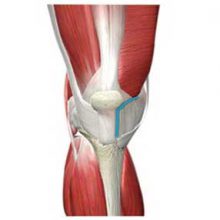
Minimally Invasive Total Knee Replacement surgery, employs the minimally invasive or no-cut in the muscle technique. Technically known as the Subvastus knee replacement. Compared to the traditional approach of knee replacement, in which an incision of 15-20 cm is made in the middle of the thigh muscle (the muscle just above the knee joint) to access the knee joint and the replacement is performed through this opening. Eventually the muscle is stitched back. This cutting of the muscle increased the recovery time as the time to heal the muscle is longer.
However, in a subvastus approach instead of cutting the quadricep muscle from the centre the muscle is shifted to the side to expose the knee joint and perform the joint replacement. Once the joint is replaced the muscle is moved back to its original place. As there is no muscle cut the recovery time is significantly reduced allowing the patient patients to get back to work within days.
Recovery is Much Faster post Minimally Invasive Total Knee Replacement Surgery?
Patients that recovery time varies from patient to patient based on his health condition.who have undergone Minimally Invasive Total Knee Replacement Surgery generally start walking within 5-6 hours of the surgery. They can start walking without support the next day itself. They can even go the bathroom on their own.
*It’s important to understand that recovery time varies from patient and patient.