The meniscus root plays an essential role in maintaining the circumferential hoop tension and preventing meniscal displacement. The knee surgeon in Mumbai suggest some important facts related to medial and lateral meniscus tears which are stated below:
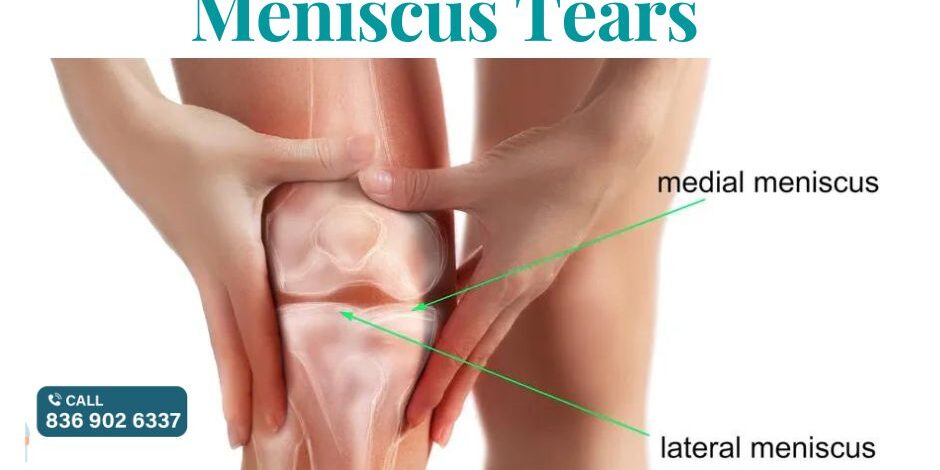
The medial meniscus is on the inner side of the knee joint.
The lateral meniscus is on the outside of the knee.
A medial meniscus tear is more common than a lateral meniscus tear, because it is firmly attached to the deep medial collateral ligament and the joint capsule. In addition, the medial meniscus absorbs up to 50% of the shock of the medial compartment, making the medial meniscus susceptible to injury.
Meniscus tear symptoms:
In sports, a meniscus tear usually happens suddenly. Here are few of the symptoms that can be noted.
- Pain
- Swelling and stiffness, increases gradually over 2 to 3 days
- Catching or locking
- Instability
A complex tear of the medial meniscus includes a combination of any of the patterns listed above. In many circumstances in patients with these tears, the meniscus needs to be trimmed out. However, this does increase the risk of osteoarthritis, especially in patients who continue to participate in impact activities.
Diagnostic:
An examination of the knee and possible arthroscopy provides a clear classification of meniscus injuries. The size and severity of the meniscus tear or rupture are often indicative for the recovery after surgery and for eventual later degenerative phenomena in the knee joint.
When we speak about a meniscus tear, we must specify what type of injuries we are dealing with. The examination of the knee and any arthroscopy provides a clear classification of meniscal lesions. The extent and severity of the meniscus tear are often indicative of the recovery after the procedure and for any subsequent degenerative symptoms in the knee joint. The classification of meniscal tears can be done according to anatomic abnormality. There are different kind of tears in the meniscus like Tear length, tear depth and tear pattern. We will discuss the different injuries below.
- Tear length – injuries of the meniscus that only occur on the surface of our meniscus.
- Tear depth – a complete meniscal tear describes a tear runs through both superior and inferior surfaces, whereas a partial tear comprises only one surface. Longitudinal injuries are often full cracks; this means that the full thickness of the meniscus is affected. Frequently, when we support our bodyweight the pressure on the meniscus with the femur will push the crack open.
- Tear pattern Tear pattern included seven different lesions of the meniscus.
Meniscus tear treatment:
If your MRI indicates a Grade 1 or 2 tear, but your symptoms and physical exam are inconsistent with a tear, surgery may not be needed.
Grade 3 meniscus tears usually require surgery, which may include arthroscopic knee surgery. Arthroscopy is a minimally invasive procedure in which the surgeon uses a thin tube with a camera to examine the inside of the knee joint. This procedure helps diagnose and treat meniscus tears effectively. In many cases, treatment can be performed immediately during the arthroscopy. It is usually performed by an experienced arthroscopic surgeon in Mumbai to ensure accurate diagnosis and effective treatment. In some cases, a larger operation may be necessary depending on the severity of the injury.
Not all meniscal lesions require surgery, conservative treatment is another option. In the treatment regimen we recognize conservative means, arthroscopic resection or a meniscal suture. Physiotherapy is one example of conservative treatment; it focuses on strengthening of the quadriceps muscle to prevent secondary quadriceps atrophy. This treatment is most successful with an incomplete tear or a small stable tear in the zone with blood supply. Also, check our blog for ACL reconstruction: choices are age- dependent.
A meniscus tear can occur when the knee is suddenly twisted while the foot is planted on the ground, or it can develop gradually as the meniscus loses its strength over time. Depending on the severity of the injury, treatment may include physiotherapy, medications, or arthroscopic surgery.
If you are experiencing knee pain, swelling, or difficulty moving your knee, early diagnosis and proper treatment are important.
Consult Dr. Shailendra Patil, knee specialist in Mumbai, for expert diagnosis and advanced treatment options.
You can also watch feedback from one of our patients here: