
Hip replacement, also known as arthroplasty, is a surgery where the damaged parts of your hip joint are removed and replaced with artificial parts called a prosthesis. The main aim of this surgery is to reduce pain, improve movement, and help you return to your normal daily activities. During the procedure, both the ball (femoral head) and the socket (acetabulum) of the hip are replaced with strong, long-lasting materials like metal, ceramic, or hard plastic.
What Is a Hip Replacement?
total hip replacement surgery
total hip replacement surgery cost
Total Hip replacement surgery can often help people who suffer from:
- Hip pain that limits everyday activities, such as walking or bending
- Hip pain that continues while resting, either day or night
- Stiffness in a hip that limits the ability to move or lift their leg
- Inadequate pain relief from anti-inflammatory drugs, physical therapy, or walking supports
Call us on +91 083 6902 6337
Chat with our Hip Surgeon In Thane Or Mulund now (Whatsapp)

How is the total hip replacement surgery performed?
In a total hip replacement surgery (also called total hip arthroplasty), the damaged bone and cartilage is removed and replaced with prosthetic components.
- The damaged femoral head is removed and replaced with a metal stem that is placed into the hollow center of the femur. The femoral stem may be either cemented or “press fit” into the bone.
- A metal or ceramic ball is placed on the upper part of the stem. This ball replaces the damaged femoral head that was removed.
- The damaged cartilage surface of the socket (acetabulum) is removed and replaced with a metal socket. Screws or cement are sometimes used to hold the socket in place.
- A plastic, ceramic, or metal spacer is inserted between the new ball and the socket to allow for a smooth gliding surface.
(Left) The individual components of a total anatomical hip replacement. (Center) The components merged into an implant. (Right) The implant as it fits into the hip.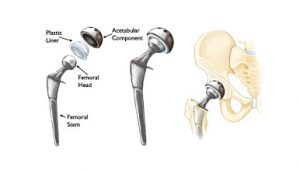
Realistic Expectations After Hip Replacement Surgery
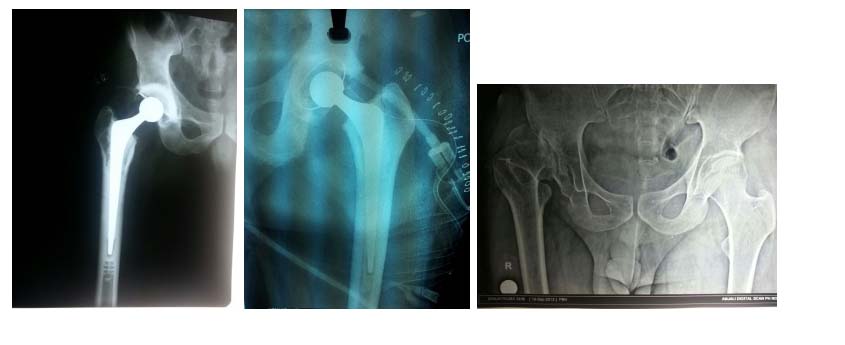
An important factor in deciding whether to have hip replacement surgery is understanding what the procedure can and cannot do. Most people who undergo hip replacement surgery experience a dramatic reduction of hip pain and a significant improvement in their ability to perform the common activities of daily living.
With normal use and activity, the material between the head and the socket of every hip replacement implant begins to wear. Excessive activity or being overweight may speed up this normal wear and cause the hip replacement to loosen and become painful. Therefore, most orthopedic surgeons advise against high-impact activities such as running, jogging, jumping, or other high-impact sports.
Realistic activities following total hip replacement include unlimited walking, swimming, golf, driving, hiking, biking, dancing, and other low-impact sports.
With appropriate activity modification, hip replacements can last for many years.
Common Causes of Hip Pain
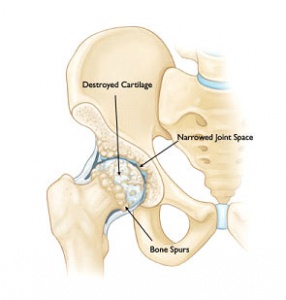
The most common cause of chronic hip pain and disability is arthritis. Osteoarthritis, rheumatoid arthritis,ankylosing spondylitis and traumatic arthritis are the most common forms of this disease.
- Osteoarthritis. This is an age-related “wear and tear” type of arthritis.
- Post-traumatic arthritis.
- Childhood hip disease.
- Avascular necrosis.
- Rheumatoid arthritis/ ankylosing arthritis.
Common Causes of Hip Pain
Patient Feedback after Hip Replacement Surgery

FREQUENTLY ASKED QUESTIONS
What is total hip replacement surgery?
It replaces the damaged hip joint with an artificial ball and socket to relieve pain and restore motion.
How to prepare for total hip replacement surgery?
Stay active, do light exercises, avoid smoking, and complete all medical tests as advised by your doctor.
How long does total hip replacement surgery take?
It usually takes around 2 to 3 hours.