Do you experience pain in or around your shoulders that makes simple activities, like grabbing things from a shelf, sleeping, or lifting your arm, challenging? Doctors in an orthopedic hospital recommend conservative treatments, such as medication and physiotherapy, to ease your symptoms.
If they fail, you may need shoulder arthroscopy. It’s a minimally invasive shoulder surgery that helps doctors examine the inside of your shoulder joint. We’ll learn more about shoulder arthroscopy —when it’s needed and what happens during the procedure — in this post.
Understanding Shoulder Arthroscopy
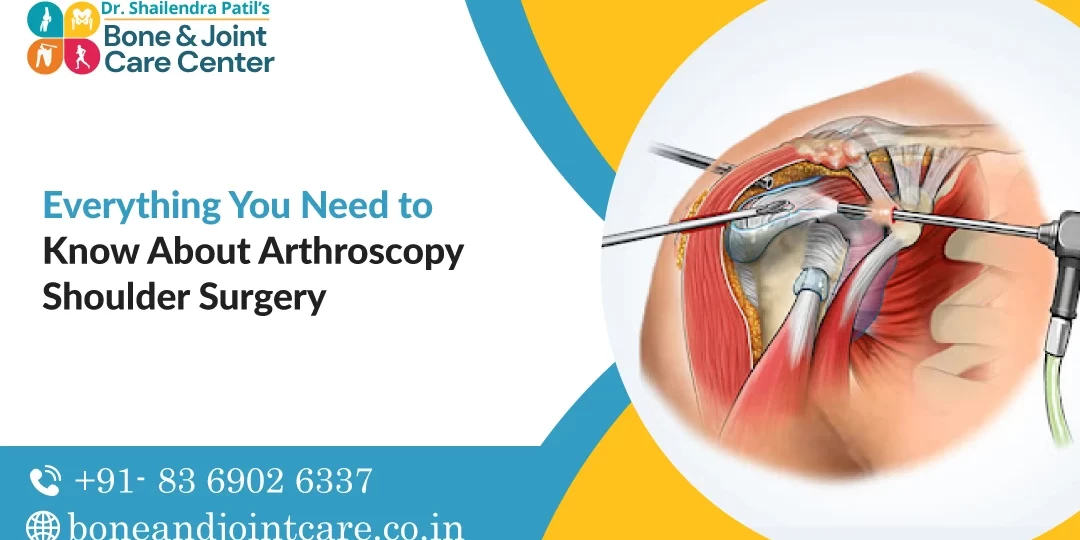
Shoulder arthroscopy is done with an arthroscope, which is inserted into your shoulder through a keyhole-sized incision. The tool creates clear, detailed images of the inside of your shoulder on the monitor.
The surgeon inserts other miniature instruments to address the problem. All of this is done through a tiny hole, making the surgery less invasive and a highly effective procedure for shoulder issues.
When is Shoulder Arthroscopy Recommended?
Shoulder arthroscopy, as mentioned above, is recommended when other treatments do not provide relief. The surgery may be needed for:
- Rotator cuff tears (when muscles and tendons that help move and rotate your shoulder joints are torn)
- Shoulder impingement syndrome
- Bone spurs
- Frozen shoulders
- Osteoarthritis
- Shoulder instability
- Biceps tendon injuries
- Shoulder dislocation
The surgery removes inflamed tissues, repairs torn tendons, removes loose cartilage, and tightens ligaments.
What Happens During Shoulder Arthroscopy?
An orthopedic surgeon in Mumbai will provide instructions for pre-surgical preparation, such as which medications to stop before surgery and when to stop eating. You may also undergo MRI, CT Scan, X-ray, and other tests. The good news is that shoulder arthroscopy is an outpatient procedure. You can go home the same day and resume light activities (if your doctor gives you a green light).
Here’s what you can expect during the surgery:
- The surgery begins with general or regional anesthesia (both of which block pain).
- The surgeon will fill fluid into your shoulder joint to inflate it for a better view.
- They will proceed with the incision. Usually, a tiny, buttonhole-sized incision is placed on the affected shoulder joint, followed by 2-3 more (same-sized) incisions.
- They insert the arthroscope through the incision. The device sends pictures of your shoulders to the screen.
- Based on the diagnosis, the doctor inserts other specialized instruments through other holes to repair, smooth, trim, or remove the damaged parts.
- They close the incision with stitches and put a bandage over it.
The surgery can last 1-2 hours or less.
Recovery after Shoulder Arthroscopy
You can expect a fast, shorter, and less painful recovery. You will be in the hospital for the first few hours until the anesthesia wears off. Your surgeon will prescribe anti-inflammatory and pain-relief medication to relieve swelling and pain. Follow your doctor’s instructions for keeping the incision site clean.
You can start with gentle shoulder exercises. You may also need to start physiotherapy to restore your shoulder movements. Usually, patients return to their normal activities within 2-3 weeks of the surgery.