
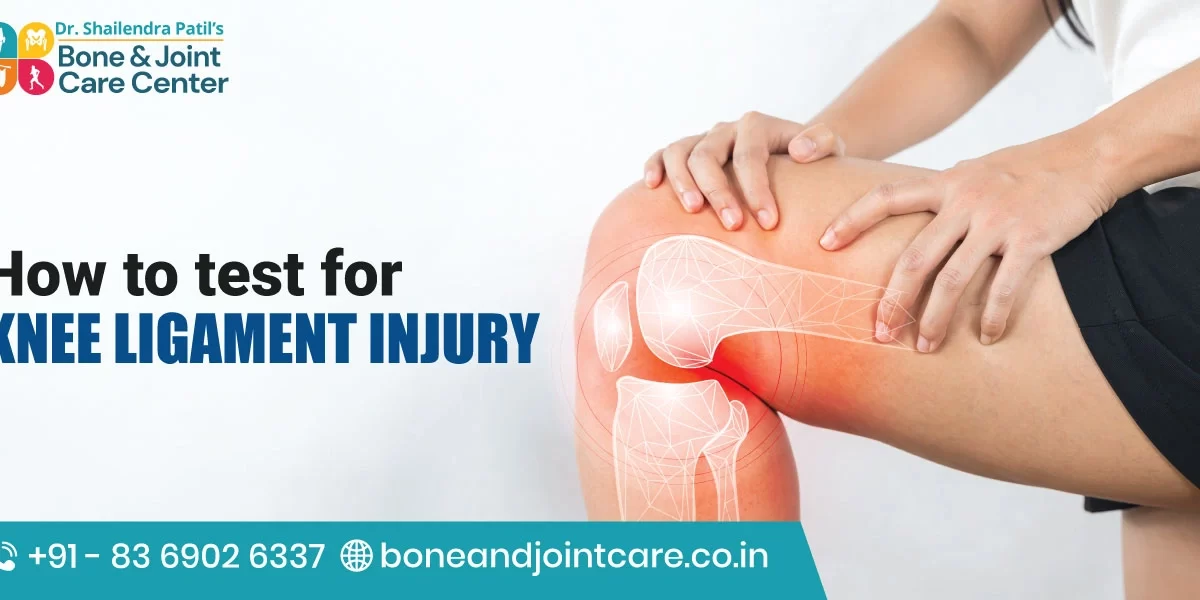
The knee is composed of four main ligament structures that work together to stabilize the knee joint. Each one plays a unique role, so when you have suffered a knee injury, a knee specialist in Thane will use a combination of physical symptoms, imaging, and tests to understand which ligament is injured.
A Detailed Look into the Injury
You aren’t sent straight away to the diagnostic lab for scans. The tests begin with simple questions about how the injury happened in the first place. Questions like, did you hear a pop sound when you injured the knee? Did swelling occur immediately or hours later? Can you bear weight?
For example, if your knee got injured during sports and you heard a pop sound followed by swelling, an ACL tear might be possible. If the outside of the knee is injured, but you experience pain on the inside, the MCL might be injured.
Stability Testing
An orthopedic doctor might conduct the Lachman Test to check for ACL injury. Here’s how they do it:
- You lie on your back with your knees bent about 20-30 degrees
- The doctor will hold your thigh and pull your shin forward
Excessive forward movement and a soft endpoint are classic signs of a torn ACL.
The Anterior Drawer Test is performed in the same way, except your knee is bent 90 degrees. If a PCL injury is suspected, the doctor will perform a Posterior Drawer Test. Here’s how:
- You lie straight on your back with your knees bent 90 degrees
- Your doctor will hold your thigh with one hand and pull the shin backwards
Imaging Tests
The above tests often help your doctor identify the injured ligament, but imaging tests are often needed to diagnose the severity of the injury. Here’s what may help:
X-Ray: It is the first scan ordered after a knee injury. Although an X-ray may not clearly reveal much about ligaments, it helps rule out fractures and joint misalignment.
MRI: Magnetic Resonance Imaging is the most detailed and effective diagnostic test for knee injuries. It creates clear pictures of all four ligaments — ACL, PCL, MCL, LCL — and can diagnose meniscus tears, cartilage damage, bruising, and joint swelling. An MRI is also used to grade the injury, making it easier for the doctor to plan a suitable knee injury treatment in Mumbai.
When Should You Visit an Orthopedic Doctor for Knee Injuries?
Never delay seeking medical care if you experience these signs:
- A pop sound accompanied by swelling and debilitating pain right after sustaining an injury
- Your knee feels like it’s giving way
- You can’t straighten or move the knee
- Pain worsens
Identifying the underlying cause of the severe knee pain can be challenging. One second, you are walking, running, and playing sports freely; the next second, you have a badly injured knee that’s swollen or too sore to move.
It’s natural to wonder whether you have sustained a simple strain or if it’s a more serious, ligament-based injury. The above tests are commonly used to diagnose knee injuries.